Rogar Baratheon
Fire & BloodRogar Baratheon was the Lord of Storm’s End, a powerful Hand of the King, and the man whose support helped deliver the Iron Throne to Jaehaerys Targaryen. His story turns on a difficult contrast: the warrior who raised a boy to the throne later entertained a plan to set that king aside, yet was forgiven and returned to service. In his final campaign, illness did not keep him from the fight he believed would define the end of his life.
Identity and Background
Blue-eyed, black-bearded, and powerfully built, Rogar was the eldest of five brothers and a grandson of Orys Baratheon, the first Baratheon lord of Storm’s End. Through Orys’s marriage to Argilac Durrandon’s daughter, Rogar could claim descent from both the dragonlords and the old storm kings. He was no swordsman: his preferred weapon was a double-bladed axe, which he liked to describe as large enough to split a dragon’s skull. The boast suited his formidable public image, but it also furnished a measure of the martial ambition that remained central to him.
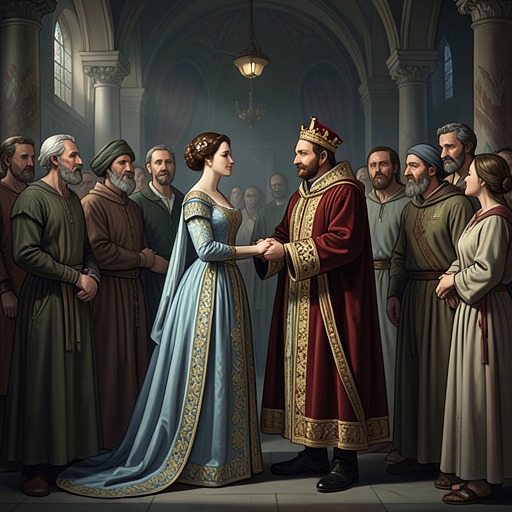
Rogar had once imagined confronting Maegor the Cruel in single combat. When Queen Alyssa Targaryen and her children fled King’s Landing, he gave them shelter despite the danger of opposing the king. That choice became the foundation of his most consequential political act. At Storm’s End, with Alyssa and her daughter Alysanne beside him, Rogar proclaimed Jaehaerys the lawful king. Jaehaerys, then fourteen, named him Protector of the Realm and Hand of the King. A hundred banner lords and stormland knights witnessed the proclamation; Rogar’s argument for the young king also rested on the two dragons commanded by Jaehaerys and Alysanne. Rhaena Targaryen soon joined them, bringing the prince’s cause another dragon and further strengthening its claim.
Kingmaker and Hand
Rogar’s rise was not simply a matter of titles. He had offered protection when the royal family needed it, called the banners that made Jaehaerys’s claim a public challenge, and helped place the boy on the Iron Throne. His former dream of killing Maegor gave way to a different kind of power: instead of becoming a kingslayer, he became a kingmaker. During Jaehaerys’s minority, the final authority rested chiefly with Queen Regent Alyssa and Rogar, though the young king attended many councils and made his voice heard.
That position brought influence, but also suspicion. Some believed the boy king would be overshadowed by the Hand, and the announcement that Rogar would marry Queen Alyssa sharpened the concern. A queen’s husband could appear to stand only a step from kingship. Rogar’s importance, however, was not confined to the regency. He later took part in the Great Council of 101, where he and other supporters backed Laenor Velaryon’s claim. The council chose Viserys Targaryen by an overwhelming margin, and Storm’s End accepted the result, though reluctantly. The decision helped establish a precedent against the Iron Throne passing to a woman or through a woman to her male descendants.
Ambition, Conflict, and Forgiveness
The last year of Alyssa’s regency exposed a more volatile side of Rogar. After a confrontation with Jaehaerys, he was consumed by the humiliation of having been forced to back down before his own men. His first impulse was to return to Dragonstone with enough force to take the castle. Alyssa persuaded him not to attack the stronghold, reminding him that her children had dragons and he did not. Her intervention averted an assault, but did not dissolve the grievance.
Rogar then proposed putting Jaehaerys aside. He denied wanting the Iron Throne for himself, presenting the plan as necessary for the good of the realm, and suggested sending the king to Oldtown to join the Citadel. The suggestion shocked the council and alienated its members; the commander of the City Watch said his men would not support it. Jaehaerys eventually received Rogar alone before the Iron Throne. Rogar knelt and offered his sword, asking that his brothers and House Baratheon be spared. The king distinguished between the treason Rogar had discussed and the treason he had actually committed, recalled that Rogar had sheltered and supported him when doing so was dangerous, and chose to treat him as a friend who had disagreed rather than as an enemy. He offered Rogar the choice of taking the black or remaining in royal service. Rogar stayed, and Jaehaerys continued to need his strength and loyalty.
The king’s mercy did not make Rogar’s motives purely selfless. The account attributes his conduct in that final regency crisis partly to pride, anger, and the shame of being contradicted by a king he had regarded almost as a son. Yet it also cautions against reducing him to a villain: Septon Barth remembered that Rogar had been a hero before the worst year of his life, and not evil or foolish at heart. His career therefore holds both the service that made him indispensable and the ambition that nearly undid that service.
Family and Loss
Rogar’s marriage to Alyssa connected his political authority to the royal family, but their household was also shaped by the dangers and obligations of succession. When Alyssa faced a fatal childbirth, the maester explained that an operation might save the child but would cost the mother her life. Jaehaerys made Rogar decide. Unable to face Alyssa, Rogar asked the maester to save his son and left the chamber; Alyssa later gave her own assent, in accounts that differ over whether she awoke before the operation. She died, while the child survived. Alysanne held her mother’s hand throughout.
Rhaena arrived at Storm’s End too late to see Alyssa alive. She confronted Rogar in his hall, blamed him for her mother’s death, and demanded that he not marry again and that he care for the children Alyssa had left behind, including their half-siblings. She threatened to make Storm’s End another Harrenhal if he took another wife. Rogar and his brothers laughed after she left, and he arranged for Alyssa’s burial and a feast celebrating the newborn daughter. The exchange reveals the chasm between Rhaena’s grief and Rogar’s composure; it also leaves her warning as a forceful limit she tried to place on his future household.
Final Campaign and Legacy
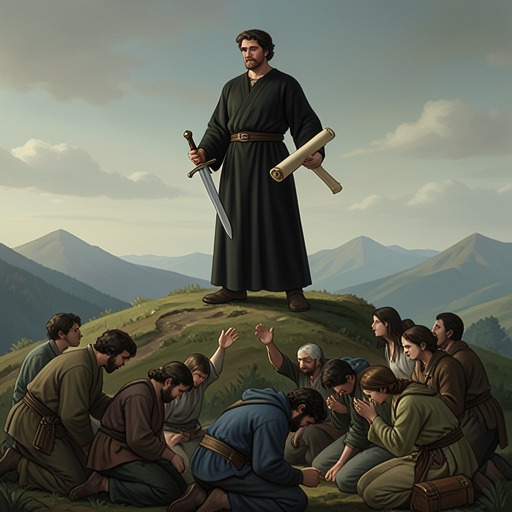
Years later, Rogar told Jaehaerys that he was dying. He had suffered pain even before the Shivers, and it had worsened since; though milk of the poppy eased it, he did not want to spend his remaining life asleep or die in bed. He asked leave to enter the mountains, find his brother Borys, who had joined the Vulture King and was raiding the stormlands, and confront them with his axe in hand. Jaehaerys gave permission and promised his own support.
The campaign, called Lord Rogar’s War by the smallfolk, was fought in 61 AC. Rogar led five hundred men into the mountains while Jaehaerys flew on Vermithor. Borys died in battle at the king’s hands. When the Vulture King was captured, Rogar demanded the right to fight him himself, offering the prisoner a spear and shield and facing him with his axe. Though weakened and in pain, Rogar defeated him. He had hoped to die fighting, but survived the campaign and returned to Storm’s End. Half a year later, he died there in the presence of his maester, septon, brother Garon, and son and heir, Boremund.
The defeat of the Vulture King sharply reduced raiding along the Dornish Marches for a time. The campaign also strengthened the realm’s confidence in Jaehaerys, dispelling lingering doubts that he would prove weak like his father. For Jaehaerys, fighting beside his old ally helped restore a sense of kingship after his helplessness during the Shivers. Rogar’s ending thus joined private resolve to public consequence: he could not choose the manner of his death, but his last campaign protected the marches, affirmed the king he had once made, and closed his career in the service of the crown.